
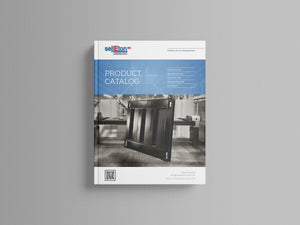

Pallet Scales
Weighing pallets accurately is foundational to warehouse operations, shipping accuracy, and inventory control across commercial and industrial environments. Whether you manage a distribution center processing hundreds of outbound shipments daily or a manufacturing facility tracking raw materials by weight, pallet scales provide the precision and compliance you need to operate efficiently and legally.
This guide covers everything you need to know about pallet weighing scales—from core types and construction features to industry applications and selection criteria—so you can make informed decisions for your operation.
Key Takeaways
-
Pallet scales are industrial weighing devices designed to weigh fully loaded pallets, skids, and bulk containers at floor level, featuring heavy-gauge steel decks, four load cells, and digital indicators for accurate weight measurements.
-
Selleton Scales supplies NTEP Certified, NIST-compliant pallet scales built for legal-for-trade use in the U.S. when products are sold by weight, supporting compliance with Handbook 44 requirements.
-
Main pallet scale types include low-profile floor scales, U-shaped pallet scales, pallet jack scales, and portable options—each suited to different workflows, space limitations, and load types.
-
Industrial-strength construction with heavy-gauge steel, multiple load cells, sealed junction boxes, and IP-rated indicators ensures durability in demanding environments like 24/7 distribution centers and washdown facilities.
-
Contact Selleton at 844-735-5386 or request a quote for custom-engineered pallet scale systems, integrations with WMS or ERP platforms, and expert guidance on your specific weighing application.
What Is a Pallet Scale?
A pallet scale is an industrial weighing device engineered to weigh fully loaded pallets, skids, and bulk containers directly at floor level. Unlike standard platform scales designed for smaller items, pallet scales accommodate the dimensions and weight of standard pallets—typically 48” x 48” platforms capable of handling loads from 3,000 to 20,000 pounds or more.
These scales typically feature low-profile platforms or integrated pallet trucks that allow easy loading with forklifts or pallet jacks. The low profile minimizes the height operators need to lift loads, reducing handling time and improving safety on the warehouse floor.
Core components of a pallet scale include:
-
Heavy-gauge steel deck: Reinforced platform that withstands daily forklift and pallet jack traffic without deflection
-
Four load cells: Precision sensors mounted at each corner for even weight distribution and accurate readings with off-center loads
-
Junction box: Sealed enclosure that connects load cell signals and protects wiring from damage
-
Digital weight indicator: Display unit showing weight readings with functions like tare, gross/net, and unit conversion
-
Optional ramps: Inclined surfaces on one or both sides for easy pallet jack access without lifting
In U.S. commercial applications where weight is used for billing—freight charges, ingredient purchases, packaged goods sales—pallet scales must be NTEP Certified to be legal for trade. This certification ensures the scale meets National Type Evaluation Program standards for accuracy and repeatability in commercial transactions.
Selleton Scales designs pallet scales specifically for high-throughput warehouse, logistics, food processing, and manufacturing operations where precision, durability, and compliance are non-negotiable.
Types of Pallet Scales
Different pallet scale configurations address different workflows, space limitations, and load types. The right choice depends on factors like whether you need a fixed weighing station or mobile capability, the size and weight of your typical loads, and whether your environment requires specialized materials like stainless steel.
This section covers the main categories: traditional pallet floor scales, U-shaped pallet scales, pallet jack scales, and portable pallet scales. Most of these types are available in NTEP-certified versions for businesses that sell by weight, and Selleton can customize dimensions, capacity, and features for special pallets, IBC totes, or non-standard skids.
Low-Profile Pallet Floor Scales
Low-profile floor scales are heavy-duty platforms—commonly 48” x 48”—mounted directly on the warehouse floor for weighing pallets with pallet jacks, tuggers, or forklifts. These warehouse floor scales typically stand just 3 to 4 inches high, minimizing the ramp angle needed for pallet access.
Design elements that define these industrial pallet scales include:
-
Checkered or diamond-plate steel deck for traction and durability
-
Four corner-mounted load cells for precise weight distribution
-
Top-access or side-access junction box for easy maintenance
-
Leveling feet for adjustment on slightly uneven floors
-
Welded steel channel construction preventing deck deflection
Low-profile floor scales excel as fixed weighing stations at shipping docks, receiving areas, and centralized inventory control points. They handle high-cycle daily use where pallets continuously move across the platform.
Options to consider include ramps on one or both sides, pit mounting for flush-with-floor installation, and integrated bump guards to protect the scale from forklift traffic. Selleton’s industrial floor scales are engineered for demanding environments and can be supplied with NTEP-certified load cells and indicators for legal-for-trade applications.
U-Shaped Pallet Scales
U-shaped pallet scales feature open-center platforms specifically shaped to fit standard wooden or plastic pallets lifted by a pallet jack. The open middle allows the pallet jack’s forks to drop the pallet directly onto the U-frame without requiring a ramp, significantly reducing lifting and handling time.
This design makes U-shaped scales particularly effective for:
-
Quick check-weighing of outbound pallets before shipping
-
Inventory spot checks during cycle counting
-
Limited-space operations where full deck scales are impractical
-
Temporary weighing stations that may need repositioning
Common capacities range from 3,000 to 5,000 pounds, with the compact footprint making these scales easy to move or reposition as workflow needs change. The U-frame design also protects cables connecting the weighing strips to the indicator.
For food processing facilities, pharmaceutical operations, and other production facilities requiring frequent cleaning, stainless steel U-shaped models provide corrosion resistance and compatibility with washdown procedures.
Pallet Jack Scales (Pallet Truck Scales)
Pallet jack scales combine a mobile pallet truck with integrated load cells and a digital indicator, allowing operators to lift, move, and weigh loads in a single process. Rather than transporting a pallet to a fixed scale, the scale travels with the load.
These mobile scales are ideal for operations that need on-the-go weighing:
-
Cross-docking operations where pallets transfer directly between trailers
-
LTL freight terminals verifying individual pallet weights
-
Production staging areas where materials move between work centers
-
Order picking operations confirming picked quantities by weight
Typical performance specifications include:
|
Specification |
Typical Range |
|
Capacity |
4,000–5,000 lb |
|
Resolution |
1–2 lb |
|
Battery |
Rechargeable, multi-shift life |
|
Fork length |
45–48 inches |
|
Fork width |
27 inches (standard pallet width) |
Ergonomic handles, smooth polyurethane wheels, and rugged forks designed for continuous warehouse use make pallet trucks practical for all-day operation. The time savings are substantial—operators no longer travel back to a fixed platform scale for each pallet, improving throughput and reducing labor costs.
Portable and Mobile Pallet Weighing Solutions
Portable pallet scales include lightweight platforms with handles, pallet beams, or mobile bases that can be rolled to different work areas. These solutions provide flexibility that fixed scales cannot match.
Practical use cases include:
-
Temporary projects or seasonal peaks requiring additional weighing capacity
-
Production cells that rearrange frequently based on product mix
-
Remote warehouse corners without dedicated weighing stations
-
Facilities testing weighing procedures before committing to permanent installation
Features that enhance portability include quick-disconnect indicators, built-in wheels or casters, and foldable or narrow profiles for storage when not in use. Wireless indicators can send data to handhelds, tablets, or warehouse management systems without physical cable connections.
Portable configurations can still be engineered to industrial duty standards. This means robust construction with heavy-duty materials rather than consumer-grade components that fail under commercial use.
Key Features of Industrial Pallet Scales
Industrial pallet scales are engineered for heavy loads, high traffic, and demanding industrial environments such as 24/7 distribution centers, cold storage facilities, and chemical processing plants. Understanding the features that affect durability, accuracy, and everyday usability helps you specify equipment that performs reliably over years of service.
NTEP-certified load cells and NIST-traceable calibration are essential for legal-for-trade applications in the United States. Beyond compliance, construction quality, indicator capabilities, and data connectivity determine how well scales integrate into your operations.
Construction and Load Cells
Heavy-gauge carbon steel or stainless steel platforms form the foundation of industrial pallet scales. Welded steel channels and structural reinforcement prevent deck deflection under full loads, maintaining accuracy even when weight is concentrated in one area of the pallet.
Four high-precision load cells mounted at each corner of the deck ensure even weight distribution. This multi-cell design delivers consistent readings even with off-center loads—a common occurrence when pallets are loaded unevenly or positioned hastily during busy periods.
Protection ratings matter in harsh environments:
|
IP Rating |
Protection Level |
Suitable Environment |
|
IP65 |
Dust-tight, low-pressure water jets |
General indoor use |
|
IP67 |
Dust-tight, temporary immersion |
Wet environments, occasional washdown |
|
IP68 |
Dust-tight, continuous immersion |
Full washdown, food processing |
Adjustable leveling feet allow the scale to be leveled on slightly uneven floors, which is critical for accuracy. Even minor tilt can introduce measurement errors that accumulate across thousands of weighings.
Selleton supplies both alloy steel and stainless steel load cells depending on exposure to chemicals, moisture, or outdoor conditions. The right choice depends on your specific environment and cleaning requirements.
Indicators and User Interface
Pallet scales pair with digital indicators featuring large LED or LCD displays readable from a distance on a busy warehouse floor. Character heights of 25mm or more ensure visibility even in low-light conditions or when operators are positioned several feet away.
Common indicator functions include:
-
Gross/net weighing: Display total weight or weight minus container/pallet tare
-
Tare: Store container weight for automatic subtraction
-
Accumulation: Sum multiple weighings for batch totals
-
Checkweighing: Compare weights against high/low setpoints with visual pass/fail indication
-
Unit switching: Toggle between pounds and kilograms
Mounting options include floor stands, wall brackets, and column mounts. Durable keypads designed for glove use withstand the demands of warehouse operations where operators rarely remove protective equipment.
Advanced options include programmable setpoints for quality control applications, batching functions for production processes, and integration with label printers or barcode scanners for automated documentation. Legal-for-trade configurations use NTEP-approved indicators matched to the platform’s capacity and resolution.
Data Connectivity and Smart Integration
Modern pallet scales can send weight data directly into WMS, ERP, or shipping systems to eliminate manual entry and reduce errors. This advanced technology transforms scales from standalone devices into integrated components of your information infrastructure.
Typical interfaces include:
-
RS-232 serial for legacy system compatibility
-
USB for direct computer connection
-
Ethernet for network integration
-
Wi-Fi for wireless connectivity without cables
-
Bluetooth for mobile device pairing
-
Fieldbus options (Profinet, EtherNet/IP) for industrial automation
Integration enables automated capture of pallet weights on packing lists, bills of lading, and production records. Operators weigh and move on while data flows automatically to the systems that need it.
Selleton engineers custom integrations and software bridges for unique workflows. Whether you need real-time inventory visibility, automated freight cost calculations, or direct communication with proprietary systems, integration support is available.
Applications of Pallet Scales
Pallet scales serve as core equipment across warehouses, manufacturing, transportation, food production, and agriculture. Their versatility stems from addressing a universal need: knowing exactly how much palletized goods weigh for accurate billing, compliance, and operational efficiency.
The following subsections cover specific operational areas where scales play a vital role in improving accuracy, compliance, and productivity.
Warehouse and Distribution Management
Pallet scales support shipping and receiving by verifying carrier weights, catching mis-labeled freight, and preventing underbilling. When incoming shipments don’t match the weight on the bill of lading, immediate documentation protects against freight claims and billing disputes.
Practical applications include:
-
Receiving verification: Confirm inbound pallet weights match purchase orders and carrier documentation
-
Shipping confirmation: Verify outbound weights before freight pickup to avoid carrier reweigh fees
-
Cycle counting: Weigh full pallets and compare to expected weights from the WMS for inventory audits
-
Pick verification: Confirm picked orders by weight before loading
Mobile pallet jack scales prove valuable on the dock, allowing operators to weigh pallets during loading without traveling to fixed scales. This reduces congestion at centralized weighing stations and improves dock throughput.
Benefits accumulate quickly in high-volume distribution centers: reduced rework, fewer freight claims, accurate billing, and improved dock turn times. E-commerce fulfillment centers, 3PL operations, and regional distribution hubs all rely on pallet scales for safe and accurate weighing of goods moving through their facilities.
Manufacturing and Production
Manufacturing operations use pallet scales at multiple points in manufacturing processes—weighing raw material pallets on receipt, tracking WIP containers between work centers, and verifying finished goods before packaging or shipping.
Quality control applications ensure that product on each pallet meets specified weight tolerances. When regulations require net weight labeling, accurate pallet weights provide the data needed for compliance.
Batching applications rely on pallet scales to measure ingredients or components by weight, maintaining formulation accuracy in processes where precise proportions matter. Food manufacturers, chemical processors, and plastics compounders all depend on weight-based batch control.
NTEP-certified pallet scales become mandatory when manufacturers sell finished product by weight to downstream customers. Examples include:
-
Metal parts manufacturing weighing castings or fabrications
-
Plastics operations weighing resin or finished components
-
Automotive suppliers tracking parts by weight
-
Chemical processing plants measuring bulk materials
Shipping, Freight, and Logistics
Accurate pallet weights drive freight pricing. Pallet scales help calculate freight class and shipping costs accurately for LTL and truckload shipments, preventing overloading of trailers or containers by verifying combined pallet weights before dispatch.
Integration with shipping systems enables automatic documentation and label generation. When scales feed data directly to transportation management systems, bills of lading and shipping labels populate without manual entry.
The financial impact is measurable:
|
Issue |
Cost Impact |
Solution |
|
Carrier reweigh fees |
$15–50 per occurrence |
Pre-weigh all shipments |
|
Accessorial charges |
Varies by carrier |
Accurate declared weights |
|
Weight disputes |
Time and administrative cost |
Documentation from certified scales |
|
Overloaded trailers |
DOT fines, safety risk |
Verify total weight before dispatch |
Cross-dock terminals, intermodal yards, and regional freight consolidation hubs use pallet scales as standard infrastructure for preventing overloading and ensuring accurate freight documentation.
Food, Beverage, and Agriculture
Food and beverage operations use pallet scales for weighing palletized produce, meat, dairy, and packaged foods for both inventory management and customer billing. When products sell by weight, NTEP-certified scales are required for legal-for-trade transactions.
Stainless steel and washdown pallet scales suit HACCP programs and production facilities requiring frequent cleaning. IP67 or IP68 rated load cells and sealed junction boxes withstand the sanitization procedures common in food processing.
Agricultural operations track feed, grain, and fertilizer by weighing bulk bags and totes on pallets. Accurate pallet weights support:
-
Traceability documentation for food safety programs
-
Compliance with labeling regulations for net contents by weight
-
Inventory management for storage platforms and silos
-
Billing accuracy for products sold by weight
Packing houses, cold storage facilities, breweries, and feed mills all incorporate pallet scales into their operations. The combination of robust construction and compliance capability makes pallet scales essential equipment in these industries.
Benefits of Investing in Quality Pallet Scales
Investing in high-quality pallet scales provides long-term ROI through accuracy, compliance, reduced labor, and cost avoidance. While upfront cost matters, the true value emerges over years of reliable service supporting accurate transactions and efficient operations.
Accuracy, Compliance, and Risk Reduction
NTEP Certified pallet scales help businesses meet Handbook 44 requirements when selling products by weight in the United States. This certification isn’t optional for commercial transactions—it’s legally required.
Accurate pallet weights reduce exposure to:
-
Regulatory penalties from state Weights and Measures inspections
-
Customer disputes over billed weights
-
Legal risk from mis-labeled shipments
-
Carrier chargebacks for declared weight errors
Properly calibrated scales minimize cumulative errors that become significant over thousands of shipments per year. Even small errors—a few pounds per pallet—compound into substantial discrepancies when multiplied across daily shipping volumes.
NIST-traceable test weights and regular calibration services reinforce compliance and audit readiness. Industries with stricter oversight, such as food, pharmaceuticals, and chemicals, require documentation proving scale accuracy and calibration history.
Operational Efficiency and Labor Savings
Strategic placement of pallet scales—including mobile pallet jack scales—reduces travel time and double-handling of pallets on the warehouse floor. Operators spend precious time moving products, not walking to distant weighing stations.
Efficiency gains include:
-
Faster dock operations with scales positioned at loading doors
-
Production lines that keep moving without weighing bottlenecks
-
Reduced training time with intuitive indicators and large displays
-
Fewer operator mistakes from unclear readings or manual data entry
Automated data capture delivers labor savings when weight information flows directly to WMS, ERP, or shipping systems. Operators no longer write down weights or manually key data into computers.
A facility that upgrades from a single central floor scale to multiple strategically placed pallet scales often sees immediate throughput improvements. The investment pays back through maximum productivity gains and reduced labor costs.
Durability and Lifecycle Cost
Heavy-duty designs with reinforced decks and high-quality load cells deliver multi-year service in harsh industrial environments. Industrial-grade scales withstand the impacts that occur in real warehouse operations—forklift collisions, dropped loads, and constant pallet jack traffic.
Long-term cost advantages of industrial pallet scales over low-cost alternatives:
|
Factor |
Industrial Grade |
Light Duty |
|
Service life |
10+ years typical |
2–5 years |
|
Repair frequency |
Infrequent |
Regular |
|
Accuracy drift |
Minimal with calibration |
Significant over time |
|
Downtime |
Rare |
Disruptive |
|
Total cost of ownership |
Lower |
Higher |
Access to local support, replacement parts, and technical assistance extends equipment life and minimizes downtime. Selleton serves as a long-term partner rather than a one-time equipment vendor, providing ongoing support throughout the scale’s service life.
Selleton Pallet Scale Solutions
Selleton Scales operates as a U.S.-based manufacturer and supplier of legal-for-trade pallet scales and integrated weighing systems. Our approach combines industrial-strength hardware with engineering support, system integration capabilities, and responsive service.
Range of Pallet Scale Configurations
Selleton’s pallet weighing portfolio spans the full range of configurations:
-
Low-profile floor scales: 48” x 48” and 48” x 60” platforms in capacities from 5,000 to 20,000 lb
-
U-shaped pallet scales: 3,000 to 5,000 lb capacity with open-center design
-
Pallet jack scales: Integrated weighing trucks with 4,000 to 5,000 lb capacity
-
Custom platforms: Engineered solutions for specific needs
Material options include painted steel for general warehousing and stainless steel for washdown or corrosive environments. Many models ship with NTEP Certification for legal-for-trade use, with documentation supporting your compliance requirements.
Accessories complete turnkey solutions: ramps for pallet jack access, pit frames for flush installation, indicator stands for optimal visibility, and guard rails protecting against forklift impacts.
Custom Engineering and System Integration
When standard configurations don’t fit your application, Selleton engineers custom platforms for oversized pallets, IBC totes, drums, and unique material handling equipment. Custom engineering addresses situations where off-the-shelf solutions compromise accuracy or efficiency.
Integration support connects scales with WMS, ERP, and shipping software via serial, Ethernet, or wireless connections. Our engineers tailor connectivity to your IT environment rather than forcing you to adapt workflows to equipment limitations.
Engineering services include:
-
Layout planning to minimize travel time and congestion
-
Multi-scale networks for facilities with distributed weighing stations
-
Automated data logging for production records and compliance documentation
-
Interface with label printers and barcode scanners for automated documentation
Contact Selleton for design assistance on complex projects rather than trying to piece together multiple components alone. Our engineering team has experience across various industries and scale configurations.
Support, Calibration, and Compliance Assistance
Selleton provides guidance on selecting the right pallet scale for specific industries, load types, and regulatory requirements. Technical support assists with installation, setup, indicator programming, and troubleshooting throughout the equipment lifecycle.
Periodic calibration maintains accuracy and legal-for-trade status. Selleton helps coordinate NIST-traceable testing and documentation, ensuring you maintain compliance between inspections.
Clear documentation supports customers passing inspections and maintaining certifications. When Weights and Measures officials visit, you have the records demonstrating proper calibration and scale accuracy.
Ready to discuss your pallet weighing application? Call 844-735-5386 or submit a Request a Quote form for personalized recommendations from our scale specialists.
How to Choose the Right Pallet Scale
Selecting the right pallet scale requires matching equipment capabilities to your operational requirements. This buyer’s guide covers the key factors to consider before making a purchase decision.
Capacity, Platform Size, and Load Type
Start by confirming your maximum pallet weight, including product, packaging, and the pallet itself. Select a scale with capacity above this maximum to provide a safety margin and accommodate occasional heavy loads.
Platform dimensions must match your pallets or skids:
|
Common Pallet Size |
Minimum Platform Size |
|
40” x 48” (GMA) |
48” x 48” |
|
48” x 48” |
48” x 48” or larger |
|
42” x 42” |
48” x 48” |
|
Custom/oversized |
Custom platform |
Consider how loads will be placed on the scale—by forklift, pallet jack, or conveyor—as this influences whether you need ramps, specific platform heights, or specialized configurations.
Share sample load details and photos with Selleton to ensure the correct design for your application.
Environment and Duty Cycle
Harsh environments require specialized construction:
-
Cold storage: Low-temperature rated components, condensation management
-
Washdown rooms: Stainless steel, IP67/IP68 rated load cells
-
Outdoor yards: Weather protection, UV-resistant materials
-
Chemical exposure: Corrosion-resistant construction
High-traffic zones with constant forklift movement benefit from thicker decks, side guards, or pit mounting that eliminates trip hazards. For 24/7 operations, prioritize industrial-grade load cells and indicators rated for continuous use.
Discuss your environment with Selleton so engineers can recommend appropriate protection and materials for reliable long-term performance.
Legal-for-Trade and Connectivity Requirements
Any business that invoices based on weight must use NTEP Certified pallet scales in the United States. This applies to:
-
Selling products by weight to customers
-
Billing freight charges based on shipment weight
-
Purchasing raw materials by weight
Internal-only uses—inventory estimates, process control checks—may not require certification, but accuracy remains crucial for operational decisions.
Identify connectivity needs upfront. Integration with WMS, ERP, or shipping platforms requires compatible indicators with appropriate communication interfaces. Select equipment that supports future upgrades, such as adding wireless networking or printers later.
Contact Selleton if you’re unsure about legal-for-trade status or integration requirements. Our team clarifies compliance obligations and recommends configurations that fit your specific needs.
FAQ
Do I need an NTEP Certified pallet scale for my warehouse?
NTEP Certification is required in the U.S. when weight is used for commercial transactions—billing customers for product or freight by weight. If pallet scales are only used for internal checks like inventory estimation or process control, certification may not be legally required, though accuracy remains important for operational decisions. Check with local Weights and Measures authorities and consult Selleton for clarification based on your specific use case.
Can pallet scales handle oversized or irregular loads?
Many pallet scales handle off-center and irregular loads within their rated capacity thanks to four load cells distributing weight measurement across the platform. Very large or unusual items—oversized containers, non-standard skids, or loads exceeding standard platform dimensions—may require custom platforms or multiple-scale solutions. Provide details, photos, and dimensions of your most challenging loads when requesting a quote so engineers can recommend the ideal solution.
How often should a pallet scale be calibrated?
Calibration frequency depends on usage intensity, environmental conditions, and regulatory requirements. Annual calibration serves as a common baseline for many operations. Heavy-use or legal-for-trade scales may require more frequent checks—semiannual or quarterly—to maintain accuracy and compliance. Selleton recommends appropriate calibration intervals and helps arrange NIST-traceable testing and documentation based on your specific application.
What is the difference between a floor pallet scale and a pallet jack scale?
A floor pallet scale is a fixed platform installed on the floor where pallets are placed for weighing. A pallet jack scale is a mobile pallet truck with built-in weighing capability that lifts, weighs, and transports loads simultaneously. Floor scales provide high accuracy at dedicated weighing stations, while pallet jack scales excel in mobile, flexible operations. Many facilities benefit from using both: fixed scales at docks for accurate shipping weights and pallet jack scales for spot checks and on-the-go weighing throughout the warehouse.
How do I know which pallet scale is best for my operation?
Consider your load types, maximum weight, pallet size, daily throughput, operating environment, and whether you sell products by weight. Connectivity needs and future automation plans also influence the decision. Different browser configurations may be needed to access online specification tools, and the site owner should ensure proper site access for procurement teams researching options. Contact Selleton at 844-735-5386 or submit a quote request to receive tailored recommendations from a scale specialist who can evaluate your specific needs and recommend equipment that delivers long-term value.